Weed Identification
There are lots of weeds and low-value grass species that can invade pastures. Here you can see the full list all the low-value grass species and weeds that are relevant to grassland and pasture in the UK.
Weed Control
Weeds compete with the grass ley, nutrients and moisture. Many weeds will thrive in newly sown leys where competition is lower. Tackling weeds is essential as they can:
• Lead to grazing rejection of weeds as well as the grass around them; this means wasted feed but also increasingly patchy and lumpy fields
• Reduce the palatability of the sward
• Decrease the digestibility of the sward
• Be injurious when ingested
• Be poisonous e.g. Ragwort
• Set seed, contributing to the growing weed population and soil seed bank
• Host diseases and pests
Weed control can take many forms, and is best approached with a combination of methods and timings. Depending on the weed species present, consider mechanical removal such as mowing or grazing, and chemical options where appropriate.
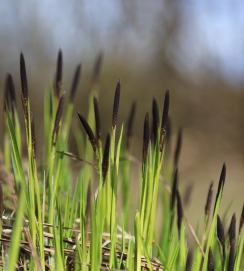
Black-grass - Alopecurus myosuroides
Annual Meadow-grass is a low-growing grass which is a light green colour. It grows from a central base, to which all the shoots can be traced, and has a creeping rootstock. The blade-like leaves are blunt-tipped and the yellow-green flower head is triangular with branched spikelets that contain the flowers.
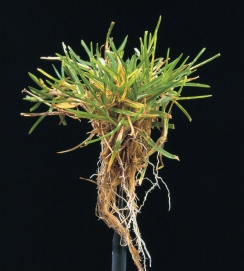
Annual Meadow Grass - Poa annua
Annual Meadow-grass is a low-growing grass which is a light green colour. It grows from a central base, to which all the shoots can be traced, and has a creeping rootstock. The blade-like leaves are blunt-tipped and the yellow-green flower head is triangular with branched spikelets that contain the flowers.
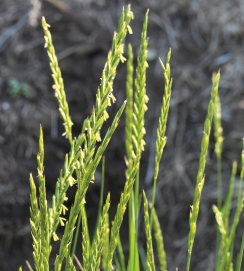
Couch Grass (Twitch Grass) - Elymus repens
A very competitive perennial grass weed. Spreads rapidly using sharp rhizomes (underground stems). It can be found growing on most soil types except those with low pH. It prefers heavy land but better able to spread in lighter soils. Germination mainly occurs during the autumn, but seedlings also emerge in spring especially when autumn germination is delayed by cold temperatures or lack of moisture. Reproduction is primarily using rhizomes, so cultivation that spreads the plant segments can worsen the problem.
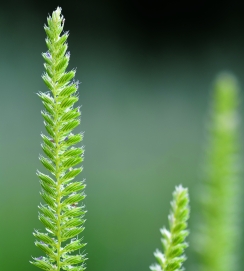
Crested Dogstail - Cynosurus cristatus
A common, tufted perennial grass weed in grassland and meadows. It tolerates many different soil types but is generally a lowland species. It grows in compacted tufts, and is stiff looking with narrow green leaves. Its dense tillering habit mean it is sometimes added to sheep pasture mixes or amenity mixtures.
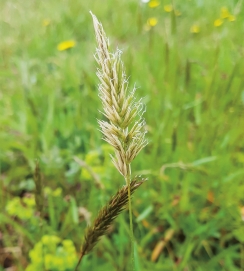
Sweet Vernal - Anthoxanthum odoratum
Sweet Vernal is a common perennial in grassland and meadows. Flowers early between April and July. Early seed set allows for improved population regeneration from seed, increasing persistence. This species contributes to the sweet smell of cut hay.
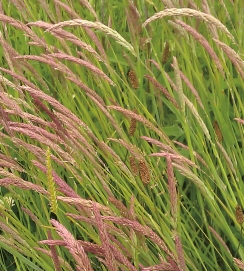
Yorkshire Fog - Holcus ianatus
A tufted, perennial species abundant in the UK. Seed can germinate over a wide range of soil temperatures and emerge mainly from April to October. Produces tillers that form large spreading clumps in established swards. Plants are relatively deep rooted and there is some evidence to suggest that it may have allelopathic effects on other plants in the sward. Purplish seed head, and soft hairy leaves.
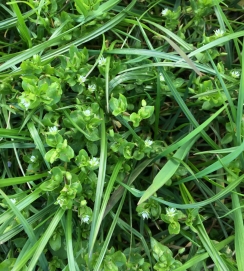
Common Chickweed - Stellaria media
Common Chickweed is a weed and can persist in rotational grass and establish in long-term pastures where there are gaps in swards due to poaching or slurry injection. With a prostrate habit and fast growth, chickweed restricts tillering of establishing grass and clover and fills in bare spaces in swards. Autumn sowings can be a problem as chickweed may overtake the slower establishing grasses and clovers, filling in bare patches.
High moisture content will cause difficulties when trying to wilt for silage and also upset silage fermentation affecting the feed value. It will also mean a longer drying time for hay-making with loss of quality. Large chickweed populations may cause digestive upset in grazing lambs and calves.
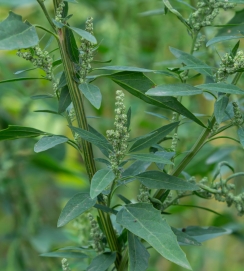
Fat Hen - Chenopodium album
A summer annual weed that establishes quickly, particularly if soil is open. Competes with a grass sward for water and nutrients. A prolific seed producer, with seeds that can remain dormant for many years.
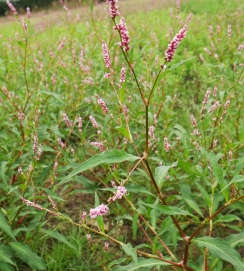
Redshank - Persicaria maculosa
A summer annual weed typically found in acidic soils. Establishes quickly and can smother out grass seedlings. Plant fragments can root at the nodes.
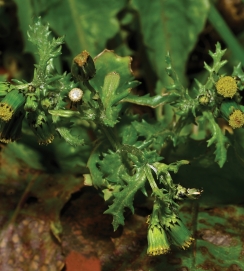
Groundsel - Senecio vulgaris
An annual weed, common on disturbed soil. Though it can produce a lot of seed and multiple generations each year, it is not highly competitive and often disappears from a pasture after a couple of defoliations.
Deeply-cut leaves in a basal rosette, and yellow flower in a tube shape.
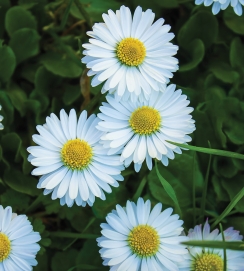
Daisy - Bellis perennis
A small, low-growing weed typically found in over-grazed pastures, as it is shaded out and out-competed by tall, strong grass stands. Found particularly on poorly drained or compacted soils. Growing from a rosette, spoon-shaped leaves, and small white flowers with a yellow centre. A low-impact weed on production, but symptomatic of other problems.
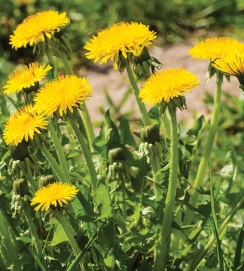
Dandelion - Taraxacum officinale
A perennial weed, common on disturbed ground. Palatable to livestock but competitive with sown species, it has a broad rosette that takes up a lot of space, and a deep strong taproot. Tooth leaved and distinctive bright yellow flowers.
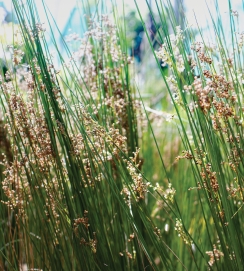
Rushes - Juncus sp.
Typically on poorly drained, low-lying, wet ground. Out-compete sown species, and are not palatable to livestock. Can usually be partially remedied by improving drainage and soil fertility.
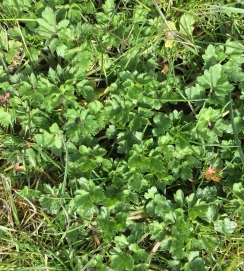
Buttercups - Ranunculus spp.
Creeping buttercup is a problem in heavily grazed, poached or wet pastures. Animals tend not to graze areas infested with buttercup as it has an acrid taste and affects grass yield and reduces hay value.
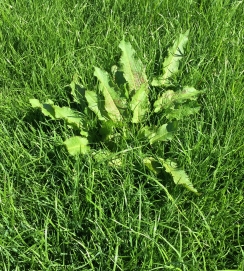
Docks - Rumex spp.
Docks compete with grass for light, nutrients and moisture and reduce grass yields and have less than 65% of the feed value of grass. Docks are unpalatable and, in general, animals will only eat them if there is nothing else available. Excessive quantities of docks in the diet can cause dietary upsets, especially in young animals. Presence of docks in silage can affect fermentation, reducing overall quality.
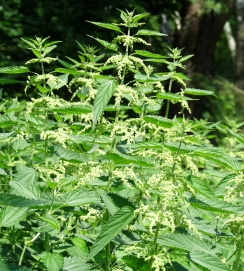
Nettles - Cirsium spp.
Favouring high-fertility sites, nettles spread through tough roots forming clumps. Nettles compete with grass for light, water and nutrients and, where nettles are dense, will out-compete the sward. Grazing stock avoid mature nettles, reducing the productivity of the swards. Nettles in hay or silage may cause rejection by stock. Best controlled in the spring when they are 30-45cm tall. Frequently cutting nettles often results in more vigorous regrowth.
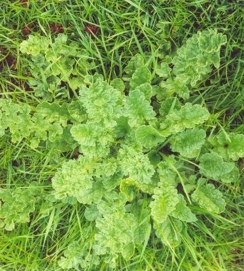
Ragwort - Senecio jacobea
This weed is potentially deadly to livestock and is listed in the Injurious Weeds Act, which requires occupiers by law to control. Under the Ragwort Control Act (2003), a code of practice was developed giving guidance on identification, priorities for control, methods, environmental considerations, and health and safety issues.
They have a daisy-like yellow flower, flowering from May to October. Ragwort is a danger to all stock, but particularly horses, cattle, free-range pigs and chickens. Alkaloids cause cirrhosis of the liver and there is no known antidote. Ragwort is largely unpalatable; ragwort may be eaten when green, particularly when other grazing is sparse. It is palatable when dead or dying because of the release of sugars, so contamination of hay or silage is very dangerous.
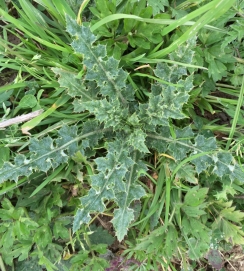
Thistles - Cirsium spp.
There are 150 species of thistles worldwide, with 20 in the UK. Thistles need controlling as they compete with grass for space, light, nutrients and water. Thistles are unpalatable to stock and reduce the available grazing, and can increase the incidence of Orf. The 2 most common and damaging are creeping thistle and spear (Scotch) thistle.
Creeping Thistle (Cirsium arvense): A perennial that grows from seed or from root sections in the soil. Once established, the root mass can be greater than the plant above ground, competing with the grass. Spear Thistle (Cirsium vulgare): a biennial that grows from seed, and in the first year often goes unnoticed, since it produces only a small rosette. In the second year the plant can grow to over a metre in diameter before flowering.