Maximising Maize Yields
The Right Way to Under-sow Without Sacrificing Productivity
Farmers are increasingly turning to under-sowing maize with grass or legume-rich cover crops to preserve valuable soil nitrates, reduce winter soil erosion, and prevent watercourse pollution. However, to reap the full benefits of this practice, careful planning and selection of the under-sown crop is crucial.
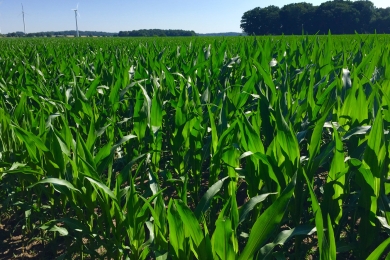
The rising interest in under-sown maize is driven by its multiple advantages: it locks in nitrate residues, provides winter grazing opportunities, and reduces the need for bagged nitrogen in the following year. By choosing the right cover crop, growers can not only meet environmental regulations but also boost their economic returns.
The Importance of Choosing the Right Variety
There are several methods to under-sow maize, many of which don’t require specialised equipment. But while the drilling method is important, the most critical decision is selecting the right variety to under-sow. Using the wrong crop can be detrimental, leading to reduced maize yields that wipe out any gains made from nitrogen retention and soil preservation.
Although maize is known as a hardy crop, it’s particularly vulnerable during its early growth stages. Under-sowing with an overly competitive variety can severely impact the final yield, meaning any benefits from nitrate retention or winter grazing may be nullified. This is a classic case of "robbing Peter to pay Paul."
Beware of Overly Competitive Varieties Like Italian Ryegrass
Italian ryegrass is often recommended for under-sowing due to its rapid growth and fast establishment. However, this same vigor can pose a significant threat to young maize plants. During the critical first six weeks post-emergence, maize struggles to compete for nutrients and moisture. Italian ryegrass’s aggressive growth during this period can drastically reduce the maize crop’s yield.
Additionally, Italian ryegrass is becoming a problematic weed in the arable sector, raising concerns for growers considering it for under-sowing. This issue is especially pronounced if you plan to under-sow maize simultaneously to avoid soil compaction and extra costs.
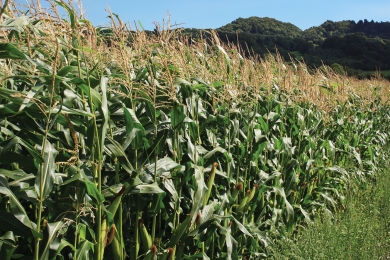
A Better Alternative: Proterra Maize
To address these challenges, Barenbrug UK developed Proterra Maize, a crop-specific green cover option based on tall fescue genetics. Proterra’s deep-branched rooting system helps maintain soil structure and health after harvest, soaking up nutrients from deeper soil layers than other alternatives. This makes it a safer choice for growers wary of the Italian ryegrass risk.
Unlike Italian ryegrass, Proterra is designed with traits that allow for rapid germination but slow growth afterward. This gives maize time to establish itself without the threat of competition for sunlight, moisture, or nutrients.
An added advantage of Proterra’s branched root system is that it enhances soil bearing capacity and sequesters more carbon deeper into the soil, which research shows is most stable at depths below 20 cm. This helps growers avoid soil damage while still reaping the environmental benefits of under-sowing.
Conclusion: A Smart Choice for Sustainable Farming
Proterra Maize offers a dependable alternative to Italian ryegrass for under-sowing maize. With its maize-friendly design, it supports soil health, reduces nitrate leaching, and improves overall resilience to weather conditions. Growers can enjoy the dual benefits of protecting their crops and maximising yields without worrying about under-sown crops harming maize growth.
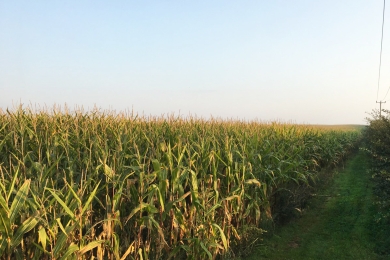
Proterra Maize at a Glance:
A "maize-friendly" alternative to Italian ryegrass
Based on tall fescue, which grows slower and is less competitive with maize
Improves soil resilience and reduces erosion
Ideal for forage and anaerobic digestion (AD) situations
Sowing rate: 12 kg/ha, drilled when maize reaches 6–8 leaves
Can be drilled using an inter-row drill
Provides a stable surface for machinery post-harvest
Proterra Maize
-
Quick and easy option for undersowing to maize
-
Tall fescue is slower growing than ryegrass, so does not over compete with the maize crop
-
Short-Medium term