Diploids and Tetraploids
Diploid and Tetraploid: What Do These Terms Mean?
Our ryegrass varieties, often have terms like "diploid" or "tetraploid" mentioned. But what do these terms mean, and how do they affect your grass crops? Here’s a simple way to remember: think D for Diploid and Density, and T for Tetraploid and Tasty!
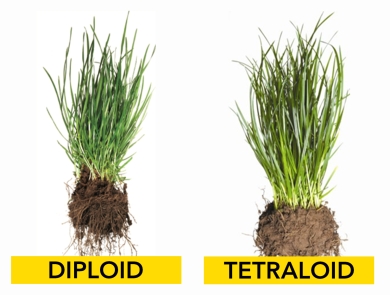
Understanding Diploids and Tetraploids
These terms apply to all four ryegrass types: Westerwolds, Italian ryegrasses, hybrid ryegrasses, and perennial ryegrasses. Let’s explore what makes them different and how they benefit your grass crop.
The Scientific Explanation
“Ploidy” refers to the number of chromosome sets in a plant’s cells. In ryegrass, a diploid plant has two sets of chromosomes (14 in total), which is the natural form.
By using colchicine, a chemical that inhibits cell division at an early stage, plant breeders can create tetraploid plants with four sets of chromosomes (28 in total). The term "tetra" comes from the Greek word for four. This breeding technique has been used for years to develop larger, more productive ryegrass varieties, especially for agricultural forage markets.
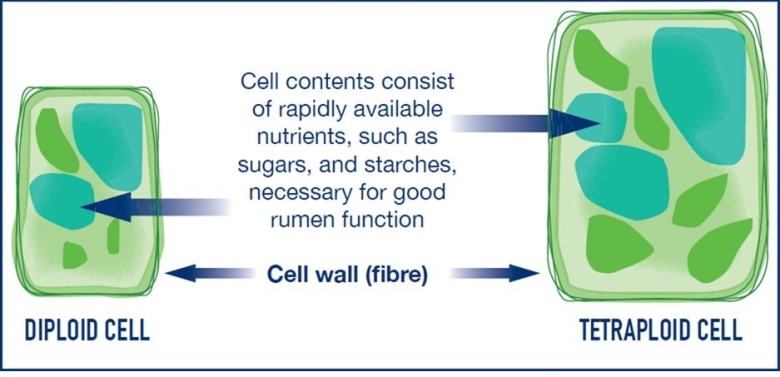
Diploid cells are smaller, leading to more structural cell wall material. On the other hand, tetraploid cells are larger and contain more water-soluble carbohydrates (sugars).
The Practical Explanation
Here’s what diploids and tetraploids offer in practice:
Key Benefits of Diploids
Diploids provide a denser sward (grass cover) due to:
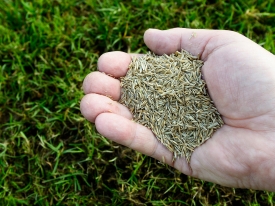
- More seeds per kilogram: A perennial diploid ryegrass averages 600,000 seeds per kilogram compared to 290,000 seeds for a tetraploid.
- Higher tillering capacity: Diploids can produce up to 60% more tillers (shoots) per plant than tetraploids.
This increased density offers several advantages:
- Greater competitiveness against weeds.
- Better resilience in grazing stress conditions.
- Improved persistence over time.
Key Benefits of Tetraploids
While diploids are dense and hardy, tetraploids bring their own strengths:
- Nutritional advantages: Tetraploids are higher in sugars, which can improve palatability and lead to higher livestock intake.
- Digestibility: Their lower structural cell wall content enhances digestibility, potentially boosting meat and milk production.
- Silage benefits: Higher sugar content aids in silage fermentation.
- Clover integration: The upright growth habit and open sward structure allow clover to thrive, reducing competition.
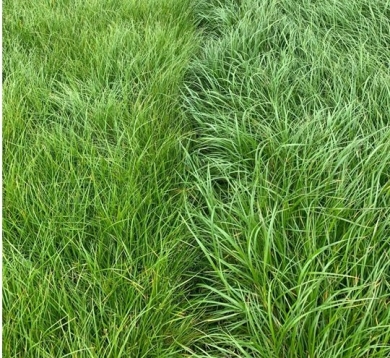
Visually, tetraploids are striking, with broader leaves, a more upright posture, and a darker green colour as seen here in this image:
So, Which Should You Choose?
Both diploids and tetraploids are essential, and balanced mixtures allow farmers to maximise the benefits of both. Here’s how to decide based on your needs:
For Short-Term Rotations or Silage-Focused Systems
- Favor higher proportions of tetraploids.
- Keep tetraploids at no more than 50% of the mix for short-term systems and lower for medium- to long-term rotations.
- Increase sowing rates to compensate for the more open sward.
- Be ready to overseed if the sward becomes sparse.
Tetraploids are excellent for overseeding due to their larger seed size, which allows for faster establishment and better competition with existing plants.
For Long-Term or Permanent Grasslands
- Emphasise diploids for their density and resilience.
- A mix of two-thirds diploid to one-third tetraploid is a practical choice for swards expected to last many years.
Diploids and tetraploids each bring unique advantages. By understanding their roles and using balanced mixtures, you can ensure a productive and durable grass crop tailored to your needs.
To see more information about diploids and tetraploids, take a look at our article: 4 Steps to Success – Step 3: Plan.