Changing Production Goals? How to Adapt Your Tillage Strategy
Production goals – how you make enough units to be profitable, and stay farming – are something we talk about regularly at Barenbrug, for they underpin any successful grass strategy.
Every farm’s production goals are unique, special to their situation, not least because the output will be measured in different ways: litres of milk, kilos of beef, number of stores sold. Even when comparing two dairy farms, their production goals won’t necessarily overlap: further factors such as breeds, input levels and labour availability, to mention a few, will be influential.
Reconsidering Your Production Goals
But what if you’re at the point where you want to reconsider your production goals? Perhaps you’re looking to outwinter your stock more, put less emphasis on conserved forage, or change priorities to ease labour demands.
Whatever the reason for change, the way to achieve it is bound to come down to one thing: your grass, and how you’re going to grow it differently. And whatever that ‘different’ is – a herbal ley, a mixture with winter rigour, or wholesale change in strategy to shift grass peaks and troughs – it’s going to mean reseeding.
Aligning Steps With Your Goals
There’s no need to be prescriptive about this, but if you’re changing your production goals then it’s sensible to ensure the steps you take to reach them are compatible.
In particular, think about the tillage needed to effect those reseeds. If it’s been a few years since you changed any of your production goals, then it might be a while since you carried out any reseeding, too.

Soil Preparation Considerations
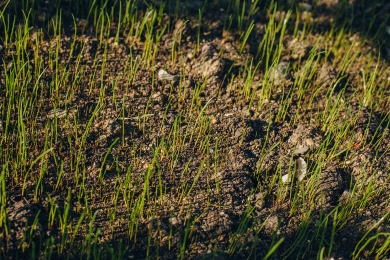
So it’s worth considering how thinking and opinions have changed, not least in the thinking about soil preparation. If any leys you’re planning to replace have been in situ for a few years, then they’re likely to have a favourable soil profile. And you might not want to disturb that by going in ‘heavy handed’ with a plough.
Of course, sometimes it will be unavoidable. Areas known to be compacted will need alleviation; disturbing the soil becomes a necessity. The same goes where drainage works are required.
Flexibility Is Key
Therefore, be flexible in your approach. Put all the options on the table, from deep-ploughing to no-till, and consider them all. But don’t get bogged down, physically or metaphorically, in making the decision. You’ll know when you’re looking at the right one.