The Value of Grass

The first article of our series focusses on how maximising the potential of grass has been the bedrock on which UK livestock production and progression has been built upon for centuries, and now more than ever, farmers should be ensuring that the forage they are producing is reaching its potential to help offset the exposure to external costs.
Nutritionist’s view
Dr Richard Kirkland – ruminant nutritionist for Volac Wilmar Ltd
“Young leafy swards provide the highest nutritional quality with peak digestibility due to the lower fibre content at this growth stage. These offer more nutrients in every mouthful of feed consumed, increasing nutrient value and energy available for production, and improving feed efficiency.
“As swards progress through longer regrowth, the proportion of fibrous stem increases, which drives down digestibility and the nutrients available to the cow. The nutritional value can only be delivered to the animal if the forage is digested, else we have more high-value feed passing through the cow and filling the slurry tank.
“Fat has the highest energy concentration of any nutrient, and early season grass is rich in those essential omega-3 fatty acids, which can provide benefits for cow fertility. However, these highly fermentable young swards can also bring challenges to milk production as the lack of structural fibre can lead to high flows through the rumen.”
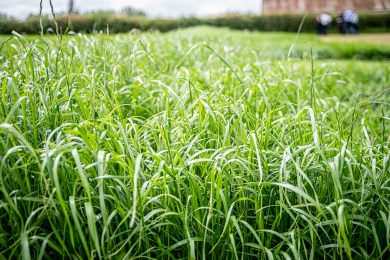
Putting a price on the value of grass
Getting the most from home-grown forage can play a vital role in supporting your farm and livestock. It is no secret that our temperate climate and correct management are perfect bedfellows for growing the richest, nutritional feed, offering wide ranging dietary and environmental benefits.
Its crucial role in diary farming has been cast into stark focus during dry weather in summers, and it is the well managed swards that recover the quickest. Tim Downes, Shropshire dairy farmer and RABDF council member, has been consistently improving his swards since the farm went organic in 1998, and says there are continual benefits to progressive grassland management.
“Finding the best and most efficient way of producing quality forage, with the resources and knowledge you have available, will provide great benefits to the farm in the long term. As a spring block calving farm, we need to make as much use of our leys and swards as possible and, by steady improvement, the value in extra yields and quality will help reduce our reliance on bought-in feed.”
We believe that growing good quality grassland will help sustain a farm’s resilience in the long term, and nutritionally rich and resilient forage starts with identifying the end goal.
Grass should be thought of as importantly as the livestock and treated as a dedicated crop. Like cereal crops, grassland needs consistent management throughout the year to improve the yield and quality. Understanding your goal is as important as knowing the starting point.
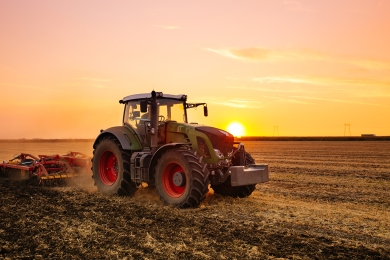
Understand your sward and soil
To achieve the most from grassland, farmers should be questioning if every field is performing as well as it can and being able to put a value on the current condition of the crop, allows improvements to be made.
However, it is also essential to remember that although high yields are needed, it shouldn’t be the only factor for which a field is judged by. Quality and the nutritional values are equally important.
We must be careful not to take grass for granted and assume its potential, just because it looks green from the roadside doesn’t mean it is full of nutritional quality. Letting grass become too fibrous and losing the sugar and digestibility content of the crop can quickly turn a good crop into an average one.
Mr Downes says measuring his grassland is an essential part of his management throughout the year and it is vitally important to how he tailors operations for different areas of the farm.
“We can’t manage what isn’t measured. We carry out 40 plate meter readings per year on our grassland to give us an indication on any underperforming areas. This allows us to tailor specific actions to increase productivity and save money on areas that are already performing well.”
Grass improvements often secondary
Looking at grass in the wider aspect of the farm and how it interacts with the environment can help fully assess the role it plays in the farming system. Mr Downes says it is more than just yield increases that farmers should be looking at for success.
“One key area we improved early on was keeping soils covered throughout winter. This has enabled us to not only protect the fertility we have built up through reducing erosion and maintaining soil structure, but it allows us to turn cows out sooner in the spring.”
A lot of Mr Downes knowledge is shared, and new ideas gained, through a variety of discussion groups, which he says are invaluable for discovering new techniques, promoting fresh ideas, and helping make decisions based on experiences from others.
By focussing on improving his soil fertility, grass yields began to improve. “We have moved away from ploughing to help improve soil structure. This isn’t to say we don’t plough, but it is a more considered approach and only carried out when we need a full reseed as there are many additional benefits that leaving the soil undisturbed can bring.”
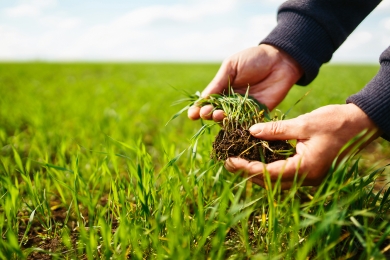
Indexing your crop
Getting an accurate picture of the current condition of crops not only requires visual assessments, but a detailed soil nutrient profile. Linking current sward status to a grass index can help identify a starting point and ensures we don’t waste valuable inputs.
An index 1 sward (see panel below) will have its best years behind it, and farmers shouldn’t be deterred by the reseed cost. “If you are still applying fertiliser to an index 1 sward, where less than 25% is sown with productive species, there aren’t enough plants to make use of the fertiliser and therefore you’ll only achieve around 15% efficiency from an application.”
Grassland maintenance isn’t just about the cost of a reseed, and farmers should be looking at the long term and wider benefits that regular grassland maintenance, and investing in the correct soil nutrition, can bring.
Return to the Grassland Series page
Index your field
Grass Index 1 – contains under 25% of productive species with significant gaps. Grass is low in nutritional value and soil fertility will be poor. Address issues in the field, and highly consider for reseeding in the next round on farm.
Grass Index 2 – Grass growth is below 40% and visible damage to the sward. Oversow or consider this field for reseeding; address weed and compaction issues.
Grass Index 3 – Fields showing weed growth, such as docks, through lots of open spaces. There will be between 40%-60% of growth of productive species, and the soil may require some nutritional additions before improvements to grass quality can be seen. Control weeds, fix areas of compaction, consider oversowing, soil test, consider changes to grazing or cutting management.
Grass Index 4 – Between 60%-80% of healthy plants that are high in nutritional quality. There will be small pockets of damage, and some weed species may be creeping in, but it will remain productive with routine soil and sward maintenance. Maintain the condition of this field through grazing or cutting management, soil testing, and fertiliser application.
Grass Index 5 – A healthy, tight sward with at least 80% productive sown species. The soil is regularly sampled to know where improvements can be made, and soil indices addressed through nutritional management. Maintain the condition of this field through grazing or cutting management, soil testing, and fertiliser application.
Case Study
Darren Shepherd – Birchills Farm, Hessop, Derbyshire
Darren Shepherd farms 485ha at Birchills Farm in Hessop, Derbyshire. The family run dairy farm has a pedigree Holstein herd, milking 600 cows twice a day and rearing all their own followers, selling any surplus animals through local markets. Current herd numbers stand at 1,300 cows (at time of case study).
The focus of the farm in recent years has been to produce more milk from forage with a programme of changing older grass leys into more productive areas. The 485ha is divided up into grazing and silage land.
“Part of the aim from the investment we are putting into the grassland is to reduce concentrate usage across the farm and achieve higher yields and quality from the forage we produce,” says Mr Shepherd.
One of the challenges, he said, in the early stages was to know where to start. “Being able to choose the correct grass varieties that would be suited to our system and our soils to achieve the maximum potential, required expert advice to get us started.”
The knowledge Mr Shepherd has gained by having professional advice has been invaluable, and this isn’t just down to sowing the right grass varieties, but also the various cultivation techniques that he has now adopted.