Drought-Damaged Grassland: Reseeding or Overseeding?
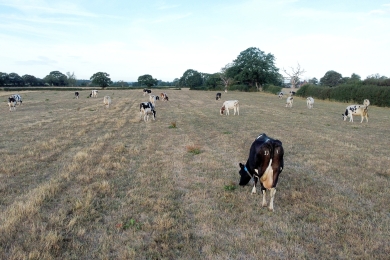
With widespread grassland damage following the hot and dry conditions of summer 2026, livestock farmers will need to plan carefully to repair their worst-affected fields. But which strategy is best: overseeding existing swards or a complete reseed? And when and how should these respective tasks be carried out to ensure the rejuvenated sward is as productive as possible? James White our Agriculture Account Manager, shares his tips and advice for the restoration of high-yielding, palatable and energy rich leys.
“Proactively reseeding or overseeding a drought-damaged or time-worn sward should be viewed as a positive investment in the farm’s resources,” James explains. “While the cost outlay can feel daunting, the improvement in the quantity and quality of home-grown forage, especially over several years or as an alternative to purchasing many tonnes of bought-in feed, is more than worth the time and money needed to get the job done.”
Our data shows, total reseeding costs (including cultivation, soil sampling, lime application, seed drilling, fertiliser application, weed control and seed inputs) can add up to £887 per hectare, with the seed element (£150/ha) accounting for just 17% of the total cost. In comparison, an equivalent overseed will cost an estimated £643 per hectare, with the seed (£150/ha) accounting for 23% of the overall cost.
“Those figures might seem onerous,” James continues, “but the increase in dry matter tonnage per hectare, improved sward palatability and amplified metabolisable energy or D-value production will easily pay for itself in terms of greater daily liveweight gains, increased milk production and improved livestock health and fertility.”
Overseeding: a short to medium-term fix
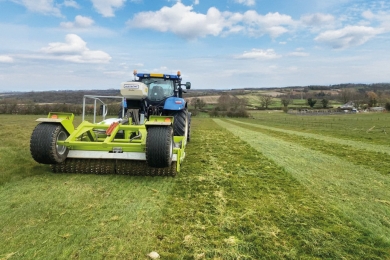
Overseeding is the quicker and cheaper of the two seeding options, but it only offers a short to medium-term solution James explains. “Overseeding provides a quick fix and is an effective method of improving pasture productivity at a lower cost point and is ideal for situations where it isn’t feasible to take a field completely out of production. If implemented carefully, overseeding has the potential to improve pasture productivity by 30 to 40% for a period of three to four years depending on soil type and quality, and the species of grasses used.”
When overseeding, James explains that it is crucial to use a seed mixture designed specifically for the purpose. “Existing grasses in the ley will already have an established root system to access nutrients, moisture and an established leaf canopy to capture light for photosynthesis. Any grass seed that is introduced therefore needs to be able to compete against these factors, with Barenbrug’s overseeding mixtures such as Barmix Renew formulated accordingly.”
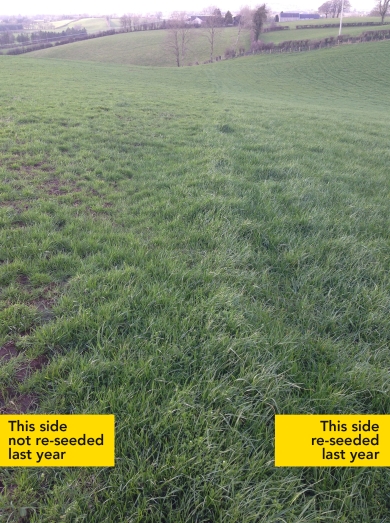
Reseeding – a longer-term solution for fields beyond repair
Carrying out a complete reseed requires a larger budget compared to overseeding but will deliver longer lasting and more impactful benefits, James continues.
“Reseeding negates the dangers associated with existing plants out-competing new seedlings for light, water and nutrients, and ensures the establishment rate achieved by the newly drilled seed is much higher,” James explains. “As with overseeding, the choice and quality of the grasses selected is an important consideration, with specialist mixtures available for a range of purposes including grazing, silage or a combination of the two.
“Careful selection of a combination of rapid-establishing species such as the ryegrasses, fescue, clover, Timothy and Cocksfoot contained within Barmix will suit a lot of scenarios, with the option to include additional herbage species such as chicory and plantain to boost protein production.”
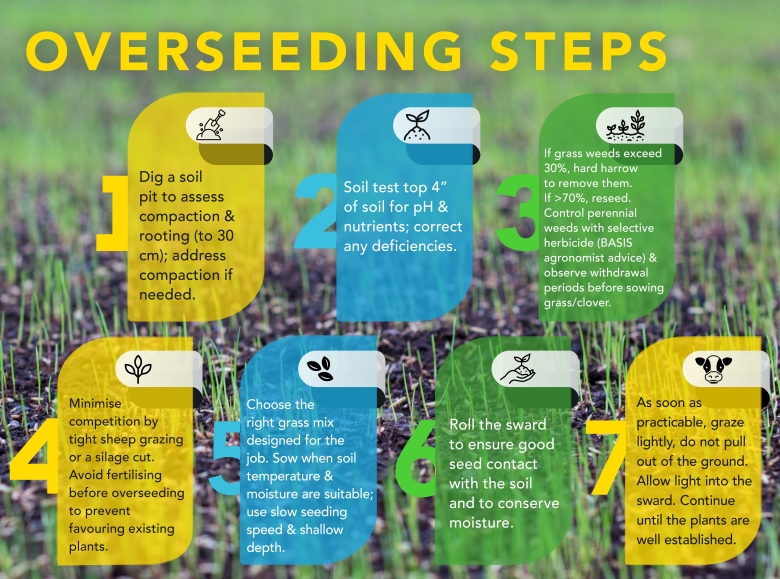
Seven steps to successful overseeding
James advocates the following steps to maximise success when overseeding into an existing sward:
Dig a soil test pit to highlight any compaction issues: address compaction so that plants can root freely to at least 30cm.
Test soil pH and nutrient availability in the top four inches of soil. Take steps to correct any deficiencies.
If grass weeds make up more than 30% of the sward, harrow hard to remove. For a sward containing more than 70% grass weeds, the best option is to reseed. Control perennial weeds before seeding by spraying with a selective herbicide on advice from a BASIS qualified agronomist.Observe chemical withdrawal periods for grass and clover.
Minimise competition to new seedlings by grazing tightly with sheep or taking a silage cut. Do not fertilise before overseeding, as this will favour existing plants and increase competition.
Choose a grass seed mixture designed for the job. Sow when soil temperature and moisture levels are appropriate, or when moisture is forecast. Drill seed slowly and to a shallow depth to maximise germination and emergence.
Roll the seedbed to ensure good seed to soil contact and to conserve moisture.
As soon as practicable, graze lightly, but do not allow new seedlings to be pulled out of the ground.
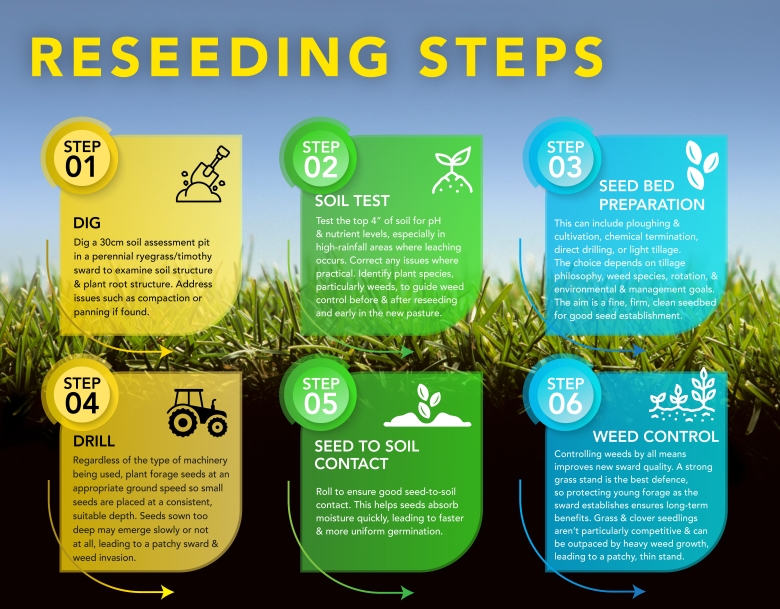
Reseeding: a step-by-step guide
To boost reseeding effectiveness, James highlights the following key steps:
Dig a soil test pit to highlight any compaction issues: address compaction so that plants can root freely to at least 30cm.
Test soil pH and nutrient availability in the top four inches of soil, especially in high rainfall areas where soils will be more prone to leaching losses. Take steps to correct any deficiencies.
Prior to cultivation, check which species of grass, herbs and weeds are present as this will inform how to plan for weed control before and/or after tillage and early in the life of a new pasture.
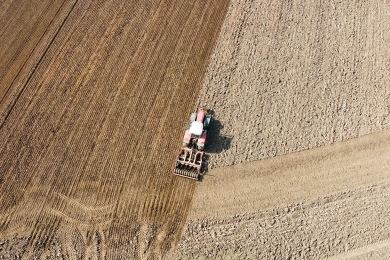
Seed bed preparation will depend on the farm's approach to tillage, available machinery and soil type and can include ploughing, a chemical termination of the existing sward with glyphosate, direct drilling, or a light till with a rotovator. Regardless of the approach, the goal is to plant seeds into a fine, firm and clean seed bed.
Choose a grass seed mixture designed for the job. Sow when soil temperature and moisture levels are appropriate, or when moisture is forecast. Drill seed slowly and to a shallow depth to maximise germination and emergence. Seeds placed too deep can take extra time to emerge or may not emerge at all, resulting in a patchy sward susceptible to weed ingression.
Roll the seedbed to ensure good seed to soil contact and to conserve moisture.
Take every feasible step to control weeds. The best defence is a strong grass stand, so protecting the young forage plants while the sward fills in will pay dividends over the life of the field.
Newly sown leys should be considered as 'establishing' for their first 12 months: careful management during this time is critical to the sward’s long-term persistency and performance. Apply light applications of fertiliser and keep on top of weed control. Graze carefully to avoid damaging the new sward and to prevent roots being damage. If in doubt, do a ‘pluck test’ (see box below) to determine when grazing can commence.
When to graze
James concludes by offering advice on when grazing can commence: “Grazing a newly established sward too early can damage the ley’s longevity and persistency,” he explains. “Livestock shouldn’t be introduced until the new seedlings have reached the 2.5 to 3-leaf stage.
“Repetitive early grazing will also damage to the new sward, especially if stress factors such as drought persist, so rotate livestock across as many fields as possible to give each ley time to recover.
“Similarly, if the new sward is left to grow too long (>3,500kg of dry matter per hectare, or more than three leaves per tiller), the bottom leaves will start to die off and there will be little additional contribution to biomass. If this dead material is allowed to build up, the sward’s overall quality will be reduced, clover will be starved of light due to shading, and the risk of disease caused by rusts and other fungi will increase.
“The best piece of advice I can give is to treat any new sward as though it were a high value combinable crop: treat it carefully, feed it everything it needs, and don’t be tempted to rush into grazing or cutting it too soon.”
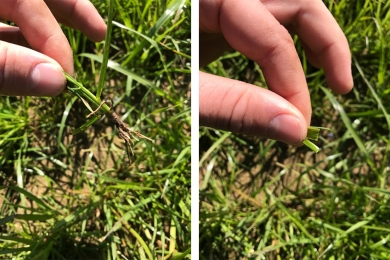
The pluck test
To determine when it is safe to start grazing a new sward (typically 6-8 weeks after seeding), carry out a simple ‘pluck test’ to assess root strength and establishment:
Grasp the grass seedling firmly between thumb and forefinger and tug upwards in a single, quick movement (to mimic an animal biting)
If the leaf of the plant breaks off and the roots stay in the ground the pluck test is passed.
If the plant's roots are pulled out of the ground, the pluck test is failed, and it is too early to graze.
Barmix
-
A multispecies grass mix, providing benefits from diverse grass rooting structures
-
Tolerant to periods of dry conditions
-
For cutting & grazing
Barmix Renew
-
Multispecies overseeding option
-
Long season production with strong growth during the shoulders
-
For cutting & grazing