How to Maximise Forage Stocks After a Challenging Summer
After the forage shortages of 2025 and the hot, dry summer of 2026, the weeks ahead will be crucial to ensuring sufficient feed stocks are in place for winter.
As such, key decisions will need to be made to ensure good forage production can be achieved once the summer’s dry conditions have passed and optimum growing conditions return.
The first and most important decision is to determine the amount of forage needed to comfortably see the herd or flock through the winter, and to calculate how much forage has already been ensiled in the year and how much is yet to be harvested. If a deficit is expected, the grazing season will have to be extended, or the demand for silage reduced. Alternatively, plans will need to be put in place to make up the shortfall from other bought-in or home-grown sources.
Where the latter is deemed to be the most reliable and/or cost-effective solution, growers have a few options:
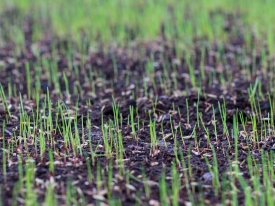
Improve autumn grazing and increase spring grass growth by over-seeding depleted leys: in this scenario, direct drilling will conserve soil moisture, while vigorous species such as hybrid ryegrass or tetraploid varieties will provide rapid growth.
For a longer-term solution, carry out a full re-seed using a mixture of varieties that offer quality over short-term yield.
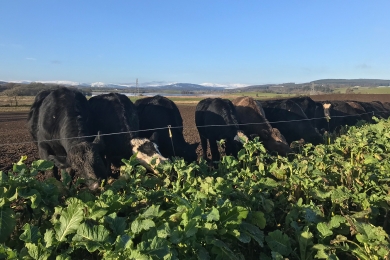
Maximise the out-wintering potential of any available and suitable ground by establishing a brassica crop such as forage rape or stubble turnips ahead of the arrival of wetter, colder conditions.
The benefit of brassicas
Establishing a fast-growing brassica crop can provide an important source of additional feed and will also give over-worked grass leys longer to recover.
Barenbrug’s primary forage rape variety, Barcoli, is a flexible forage option that can be sown in the autumn to provide a good source of winter grazing. Ideally suited to strip grazing, and with excellent regrowth traits, good aphid tolerance and a fast-growing leafy crop which takes as little as 90-100 days to reach maturity, Barcoli provides a reliable amount of winter keep for sheep, beef or dairy cattle which will all benefit from its high protein content.
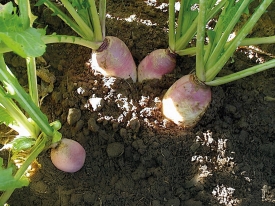
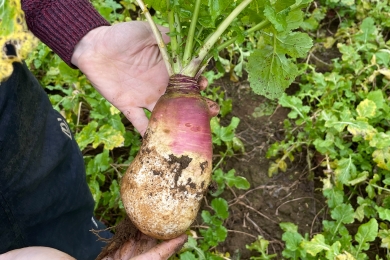
For livestock producers who’d prefer to put their faith in an out-wintering crop of stubble turnips, Barenbrug recommends Barkant. This multi-graze variety is the perfect option for sheep, beef cattle and dairy cows thanks to its high dry matter and sugar content. Quick to establish and ready to use within 60-90 days of sowing, Barkant is a diploid which produces a purple tankard root and plentiful leaf canopy. As such it is the ideal option where a predicted shortage of forage needs to be countered.
When and where
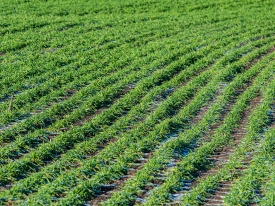
A rapid-establishing, quick-growing brassica crop of stubble turnips or forage rape can be drilled as soon as there is adequate soil moisture available. Ideally, the crop should be drilled into a fine, firm and well cultivated seedbed (which also gives an opportunity to address soil compaction issues and to correct soil pH and any nutrient deficiencies), but direct drilling can be used where the retention of soil moisture is a priority.
Once established, the crop should be monitored for signs of pest attack – particularly from flea beetle – and a suitable pesticide used where necessary to prevent a severe infestation from killing seedlings.
To maintain the crop’s quality and cleanliness, strip grazing is recommended as this will reduce yield and quality losses caused by trampling and pollution. Back fencing should also be considered if favourable growing conditions persist into the winter as this will provide additional protection to any crop regrowth.
The proof is in the pudding
As part of our partnership with the Anglia Quality Meat Association (AQM) in 2024, Barkant stubble turnips were grown on a Norfolk Farm as a source of over-winter grazing for a flock of 10,000 store lambs.
Tom Martin, store lamb finisher for AQM in West Norfolk, had this to say about the crop’s performance and effectiveness: “On the same farm where other varieties were grown in exactly the same way, Barkant yielded up to three times more in terms of leaf and bulb size.
“Barkant stubble turnips give a really good quality leaf, but what has impressed me the most is the bulb size which helped to finish our lambs on a high energy source of fodder.
“What was really interesting was the crop’s exceptional winter hardiness: Barkant produced plenty of winter feed for our sheep throughout January and into February and seemed to cope better with disease compared to the other varieties we have grown in the past.”