Grass Seed Species & Quality
Important facts to consider when buying grass seed including the right species for your goals.
Few farmers would rely on genetics from the past for livestock breeding but many stick with the same grass seed varieties and mixtures year after year – even if they aren’t delivering the best results.
For some farmers, the prospect of picking a new grass can seem daunting. There are hundreds of different varieties, blends and mixtures available – so how do you know which one will work best?
If you are unsure about which product to pick, we advise selecting a grass seed from one of the UK’s Recommended Lists. Bred to perform in UK conditions, grasses included on Recommended Lists have been have been tried and tested by farmers, who’ve seen real results.
As a starting place, perennial ryegrass remains the most popular form of grass for grazing animals in the UK. But there are many other varieties that the farming sector relies on including clover, herbs and other forms of forage crops. Used in conjunction with modern grass varieties, in specially devised blends and mixtures, these can bring big yield benefits – giving animals additional essential vitamins and minerals to help weight gain, while also reducing nitrogen fertiliser requirements.
Below, we’ve put together a quick guide to the main species available, and the most beneficial to UK farmers.
RYEGRASSES
All ryegrasses are capable of producing high yields of very high quality, high energy grass for cattle grazing. They are all very flexible and can be used for both cutting and grazing. They are very effective users of nitrogen but must be maintained well to maximise productivity.
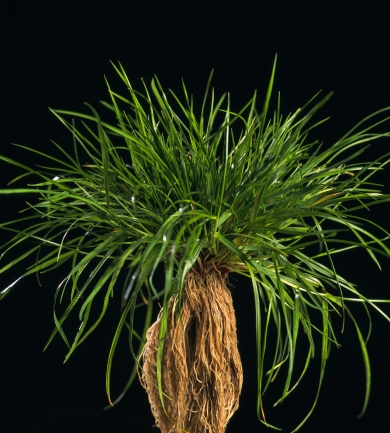
Perennial Ryegrass - Lolium perenne
Annual Meadow-grass is a low-growing grass which is a light green colour. The most commonly sown type of ryegrass. For use in pastures that will be in for 5+ years.
Dark green and glossy, tufted growth habit. Folded shoot and leaves.
Flowering Head: Flattened spike with the spikelets arranged alternately on opposite sides of the stem. The spikelets are stalk-less with the narrow, rounded face fitting against the stem.
Leaf Blade: Ribbed on upper surface, smooth and shiny underside. Red at base of stem.
Auricles & Ligule: Auricles are usually well developed, up to 1/12 of an inch (2mm) long, or are sometimes lacking.
Min. germination temp: 7-8°C.
Seeds/kg: 600,000 (diploid); 290,000 (tetraploid).
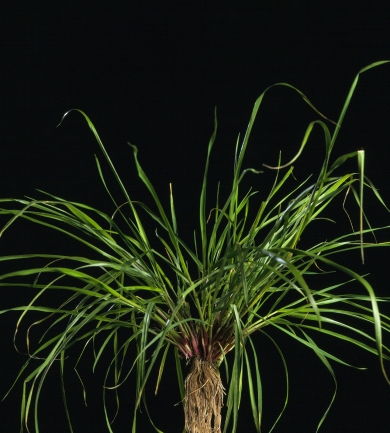
Italian Ryegrass - Lolium multiflorum
Italian ryegrasses are generally used for 2 years, making them very useful in shorter rotations.
Italians produce more dry matter than perennials, but have lower tiller density, so are well suited to cutting or intensive grazing situations.
A brighter green than perennials, densely or loosely tufted. Similar to perennials but leaves are rolled and not folded. Tends to be larger and more densely tufted than ryegrass.
Leaf Blade: Ribbed on upper surface, smooth below. Red at base.
Auricles & Ligule: Narrow, spreading, prominent when old. Small, 2mm. Blunt.
Min. germination temp: 5-6°C.
Seeds/kg: 450,000 (dip); 269,000 (tet).
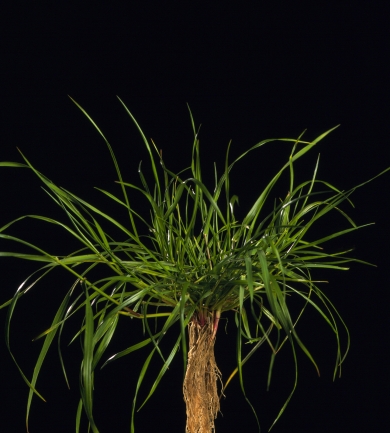
Hybrid Ryegrass - Lolium x boucheanum
A cross of perennial and Italian ryegrasses, hybrid ryegrass generally persists for 3-5 years, depending on parentage.
Hybrids can extend the grazing season with increased production in the spring and autumn shoulders, and also generally produce more biomass than perennials.
Min. germination temp: 4-5°C.
Seeds/kg: 430,000 (dip); 265,000 (tet).
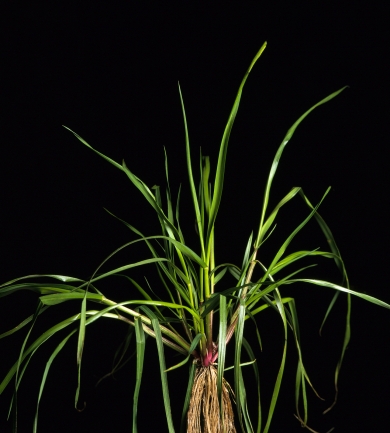
Westerwold - Lolium mul. westerwoldicum
Westerwolds are an annual ryegrass that have a 12 month +/- lifespan, and produce lots of biomass within their time.
They have rapid germination and emergence, making them useful for sowing immediately after another crop, and rapid growth when biomass is required in short order.
An annual ryegrass. Recent breeding advances in the development of quality Westerwold varieties mean it is now a serious option for UK farmers.
Westerwold annual ryegrass is an ecotype of Italian ryegrass selected for earliness and is not botanically different from Italian ryegrass and its characteristics are also similar.
Min. germination temp: 3-4°C.
Seeds/kg: 400,000 (dip); 221,000 (tet).
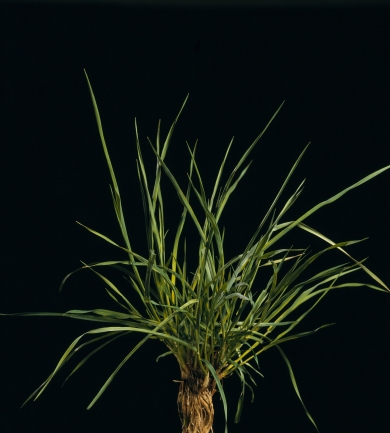
Timothy - Phleum pratense
Modern timothys are bred to have softer leaves and higher palatability than older varieties.
Generally light green or greyish-green. Flattened shoot.
Flowering Head: Dense cylindrical spike. Spikelets are small, single flowered and tightly packed; green, often tinted pink or white.
Leaf Blade: Flattened Broad leaves. Smooth, double rib down the centre. Boat shaped at tip.
Auricles & Ligule: Small and spreading, minutely hairy. Short, 2mm. Finely serrated.
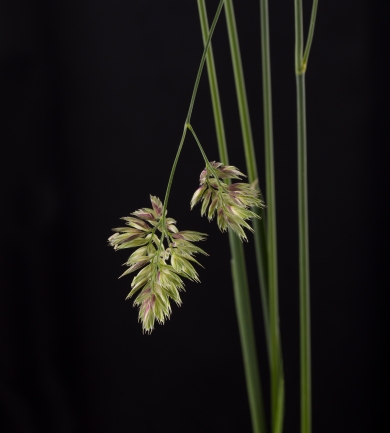
Cocksfoot - Dactylis glomerata
Modern cocksfoot varieties are finer leaved and have a more spreading growth habit that older varieties.
Often bluish-green in colour, leaves emerge from the basal growing point folded flat.
One-sided, distinctive flower/feather-like seed head. Spikelets are small flattened and condensed into oval shaped clusters.
Auricles & Ligule: Dull leaf, flattened, wide and flat.
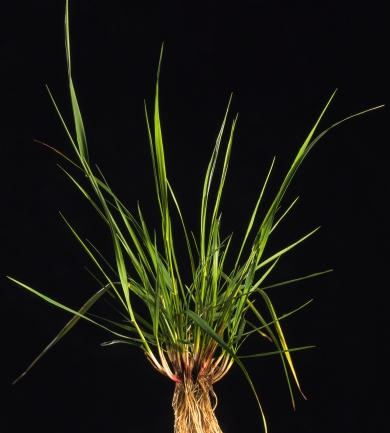
Tall Fescue - Festuca arundinacea
Tall, tufted perennial. Short bristles along edge of collar.
Leaf Blade: Broad green leaves, fringed auricle and strongly ribbed leaves, glossy lower surface.
Auricles & Ligule: Small and spreading, minutely hairy. Short, 2mm. Finely serrated.
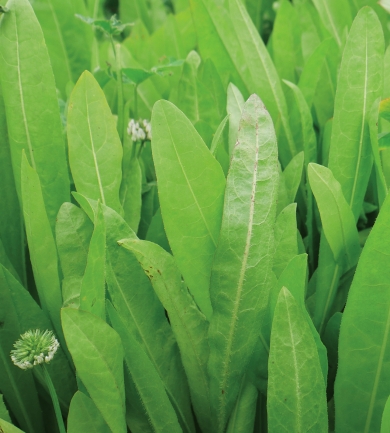
Chicory - Chicorium intybus
A herb with salad-like leaves, and blue flowers.
Has very good nutritional quality, and can be used to finish fattening animals.
Often used in a mix with grass to augment pasture quality and provide biodiversity.
Has a very deep taproot which can help to improve soil structure and drainage, and access water and nutrients below the grass root zone. Has anthelmintic properties.
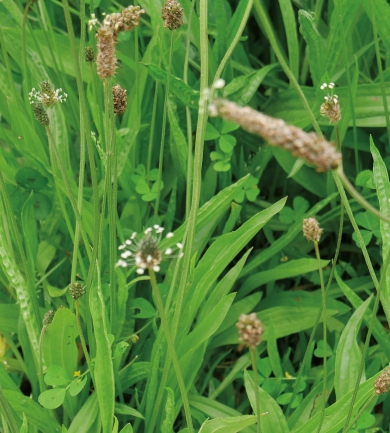
Plantain - Plantago lanceolata
A perennial herb with a deep tap root, making it tolerant to dry conditions.
The taproot can improve soil structure and drainage, and brings up minerals from below the root zone that augment a ruminant diet.
Plantain has high digestibility and palatability. Also known as ribwort plantain.
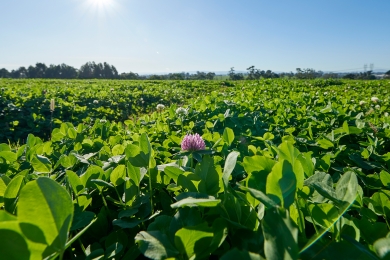
White & Red Clover
Clovers fix nitrogen in the soil and are a valuable contributor to high quality pastures. The amount of N fixed depends on several factors including clover species, soil temperature, amount of artificial nitrogen present, and rainfall. Adding clover to grassland can increase sward digestibility and protein levels.
White Clover - Trifolium repens
A perennial legume with round trifoliate leaves. Spreads vegetatively using stolons - above-ground branches that provide sites for new leaves, roots, and flowers. White clovers have a low growing point making them very well suited to grazing.
Min. germination temp: 9-10°C.
Seeds/kg: 1,500,000.
Red Clover - Trifolium pratense
A perennial legume that typically lasts for 2 - 4 years. Oval leaves, an upright growth habit, and a strong deep tap root. Red clovers are larger and taller than white clover, and are excellent at attracting pollinators. Their growing point is higher up the plant and they are less tolerant of close or constant grazing, making red clovers more suited to cutting systems. With proper management, red clover can persist for 5+ years. In older varieties, high levels of phytoestrogens should be avoided in pregnant animals.
Min. germination temp: 9-10°C.
Seeds/kg: 520,000.